ARCHITECTURE WORKERS: ORGANIZING FOR CHANGE
Across movements for workplaces, schools, and policies, architecture workers expand solidarity by building an ecosystem of change.
The 50-minute film is composed of seven chapters. They are:
1. Why Organize
The Personal Stakes of Architecture Labor
2. Past Organizing
A History of Architecture Workers Organizing in the US
3. Unionization
Building Worker Power in Architecture Firms
4. Cooperatives
Envisioning Cooperatives of Architecture Workers
5. Organizing Academia
From Studio to System
6. Beyond Licensure
New Pathways to Architecture Work
7. Expanding Solidarity
Social and Global Justice by and for Architecture Workers
Looking to organize a screening in your community? View our screening guide!

In collaboration with members of The Architecture Lobby and allies.
Supported by the Graham Foundation.
Why Architecture Workers Organize: Building an Ecosystem of Change
Across the profession, architectural workers are embracing their collective power to reshape the politics of labor and space.
Every building reflects choices about who matters, what gets funded, and how power operates through space. Now the workers who design buildings are claiming agency over those choices by building workplaces that respect their expertise, firms that prioritize community needs, and a profession that values both creative vision and worker dignity.
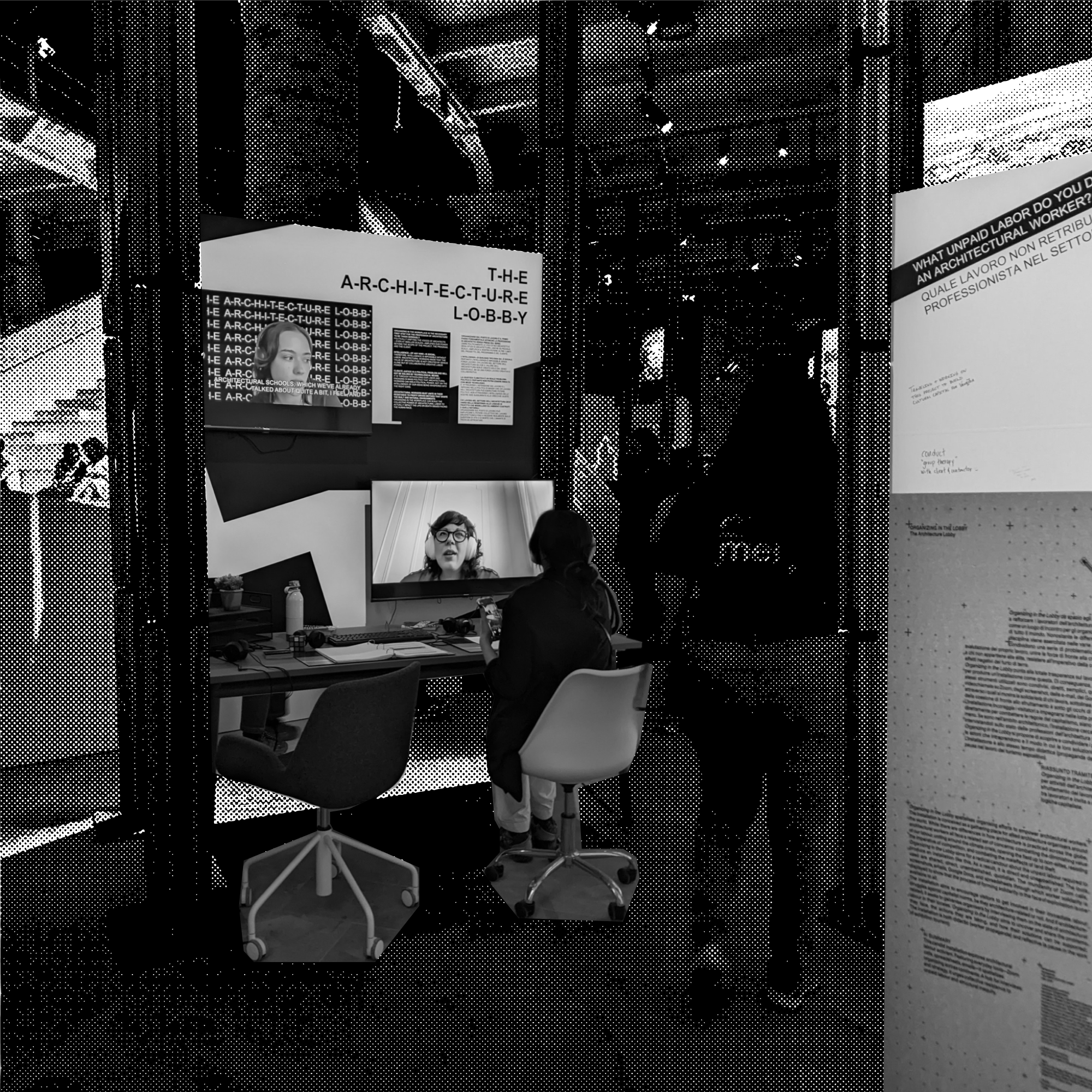
Architecture Workers: Organizing for Change introduces members of The Architecture Lobby, a grassroots organization of architectural workers, as we build power across various interconnected strategies. From individual stories of workplace exploitation to collective visions of cooperative ownership to a bold and broad vision of a world born of solidarity and collective liberation, the film reveals how organizing transforms not just individual firms, but the entire profession.
Seven Calls to Action, One Movement
The documentary’s seven episodes trace a powerful progression from individual consciousness to ecosystem-level change. “Ecosystem strategy,” as defined by organizational theorist Alnoor Ebrahim in his 2019 book Measuring Social Change, is one organization’s approach to influencing multiple actors and institutions for systemic change. The Architecture Lobby instances this approach by coordinating organizing strategies across workplaces, schools, and communities. Ebrahim’s framework maps four strategy types situated along two axes: how certain an organization can be about cause-and-effect relationships, and how much control (if any) it has over the strategy’s outcomes. The film shows that the Lobby employs approaches along each extremity of this framework: niche strategies such as union campaigns carried out in firms of various sizes, integrated strategies combining education and workplace organizing, emergent strategies that respond to opportunities as they arise, and ultimately an ecosystem strategy that influences the entire profession. Each strategy builds on the others, creating an ecosystem of transformation that extends far beyond any single workplace or institution.

Episode 1, Why Organize?, starts with the fundamental question: how has the current system of architectural work personally affected each of us? When we workers share our stories (the 26-hour shifts, the unpaid competitions, the discrimination), we discover that our struggles aren’t isolated incidents but symptoms of systemic conditions. Connection builds solidarity, and solidarity powers justice. We invite the reflection: how has architectural work affected you?
Episode 2, Past Organizing, reveals that architectural workers have fought back decades ago and shows how the ideology of professional identity has been used to divide us from other workers. From the profession’s origins in the 18th century to 1930s architects advocating for public housing and McCarthy-era blacklists that dismantled their organizations, history shows both organizing power and deliberate barriers built to repress it. Episode 2 prompts you to contemplate: where does professional identity show up in your work and how can we change that?
Episode 3, Unionization, gets practical. Through collective bargaining, we architectural workers can win shorter work weeks, higher minimum salaries, and just-cause termination protections, substantiating that organizing creates real workplace improvements. We invite you to imagine: what if you had a say in how work shapes your daily life?
Episode 4, Cooperatives, introduces democratic ownership in action. When we workers own firms collectively, we can set wages transparently, share decision-making equally, prioritize community projects over profit maximization, and so much moore. Cooperative structures prove that alternative ownership models create more equitable workplaces while maintaining professional excellence. We ask: How would working cooperatively change your practice?
Episode 5, Organizing Academia, tackles the field’s flaws at the beginning of its lifecycle. Students, faculty, and staff map power structures in architecture schools, challenge curricula that ignore labor rights, and connect education to broader social justice movements. We invite the reflection: how much power do students, faculty, and staff already hold?
Episode 6, Beyond Licensure, interrogates the gatekeeping system itself. What if education weren’t tied to state licensing? What if apprenticeships ran through unions instead of corporate firms? The question is: which skills do architectural workers really need to build power, in practice and beyond?
Episode 7, Expanding Solidarity, connects these strategies together. From climate justice to housing rights to accessibility, we architectural workers are building coalitions across movements for social change. The biggest transformations happen when struggles connect across industries, communities, and generations. We invite you to identify: where will you build solidarity?
An Ecosystem of Strategies
What makes these organizing strategies powerful is how these approaches reinforce each other. Unionization and cooperatives offer different paths to worker power: collective bargaining within existing firms versus democratic ownership of new ones. Academic organizing produces an empowered generation of worker-organizers. Historical consciousness prevents the kind of cultural amnesia that has weakened past movements. Expansive solidarity provides the path toward more fundamentally overcoming a brutally extractive, abusive, and increasingly authoritarian capitalism.
Improving conditions in architecture firms is urgent and necessary. But the stakes go further than that. It’s about recognizing that the people who design and build our environment hold the power to decide whom it ultimately serves. When architecture workers organize, we’re not just fighting for ourselves. We’re fighting for cities that prioritize affordable and dignified housing over speculation, schools that serve communities rather than developers, and climate futures built for regeneration and resilience.
Join the Movement
Every episode ends with a call to action. The film is meant to move you from watching to organizing in your workplace, university, and/or community. It’s an invitation to build power in your own circumstances. Whether you’re working long hours under the pressure of your supervisor, wondering how to start a new practice in a cooperative network, challenging the curriculum at your school, or wondering how to foster connections between architecture and the broader struggle for liberation. These strategies exist, and so does a growing network of people already using them. Join us.
The Architecture Lobby exists because collective action creates systemic change. We discover we’re not alone in our struggles when we share our stories of exploitation. Studying the history of architectural labor movements, we learn from past victories and defeats. In 2024, Bernheimer Architecture’s workers won their union contract, showing every other firm what’s possible. Architecture cooperative uxo proves that alternative ownership models work. Students organizing discussion forums plant seeds for the next generation of worker-organizers. Alternative programs like the Free Architecture School show that learning can happen outside traditional institutions altogether. Architectural workers joining climate justice and housing rights campaigns connect our workplace organizing to the broader fight for social and global justice. By organizing together, we workers can create the world we need.
Our built environment reflects our values. If we want buildings to serve the flourishing of a community, workplaces that honor and dignify worker expertise of all kinds, and cities designed for collective good, then we, the workers who design them, need power. That power comes from organizing. And organizing starts with conversations!
Architecture Workers: Organizing for Change premieres in 2026. The film can be screened as a full 50-minute program or as a 20-minute cut featuring Episodes 1, 3, and 7. To create maximum impact, we’re organizing screenings in communities before making the film widely available. Want to host a screening at your workplace, school, or community space? Reach out at strategy@architecture-lobby.org to get started. After the premiere, individual episodes will become available with discussion guides to support ongoing organizing conversations. The most important thing happens after the credits roll, when we turn strategies into campaigns in our workplaces, schools, or communities.
Looking to organize a screening in your community? View our screening guide!