The JustDesign campaign in late 2018 originally sought to give certification to architecture offices that have exemplary labor practice. It was intended to let would-be employees know how offices treated their workers, not just what designs the office produced. Surveys with six criteria for good labor practices were sent out to employees, and from there, recommended firm owners were interviewed as a follow up. Because not enough exemplary firms materialized, certification was no longer logical and the firms that did make it were written up as case studies, published on our website and in Archinect. In 2020, TAL sought a grant from the Graham Foundation for a relaunch of JustDesign (JustDesign2). It was awarded a grant in December 2020. Various factors led to the demise of that second effort — potential lawsuit from Just, another nonprofit insisting on a name change; the original grant applicants leaving the Lobby — and a request was made to change the goal of the grant to support broader worker issues, to which the Graham Foundation agreed in September 2021. In consultation with the TAL Organizing Committee and TAL membership at large, that broadening distilled into What’s your story? in May 2022.
T-H-E
A-R-C-H-I-T-E-C-T-U-R-E
L-O-B-B-Y
JustDesign

More
-
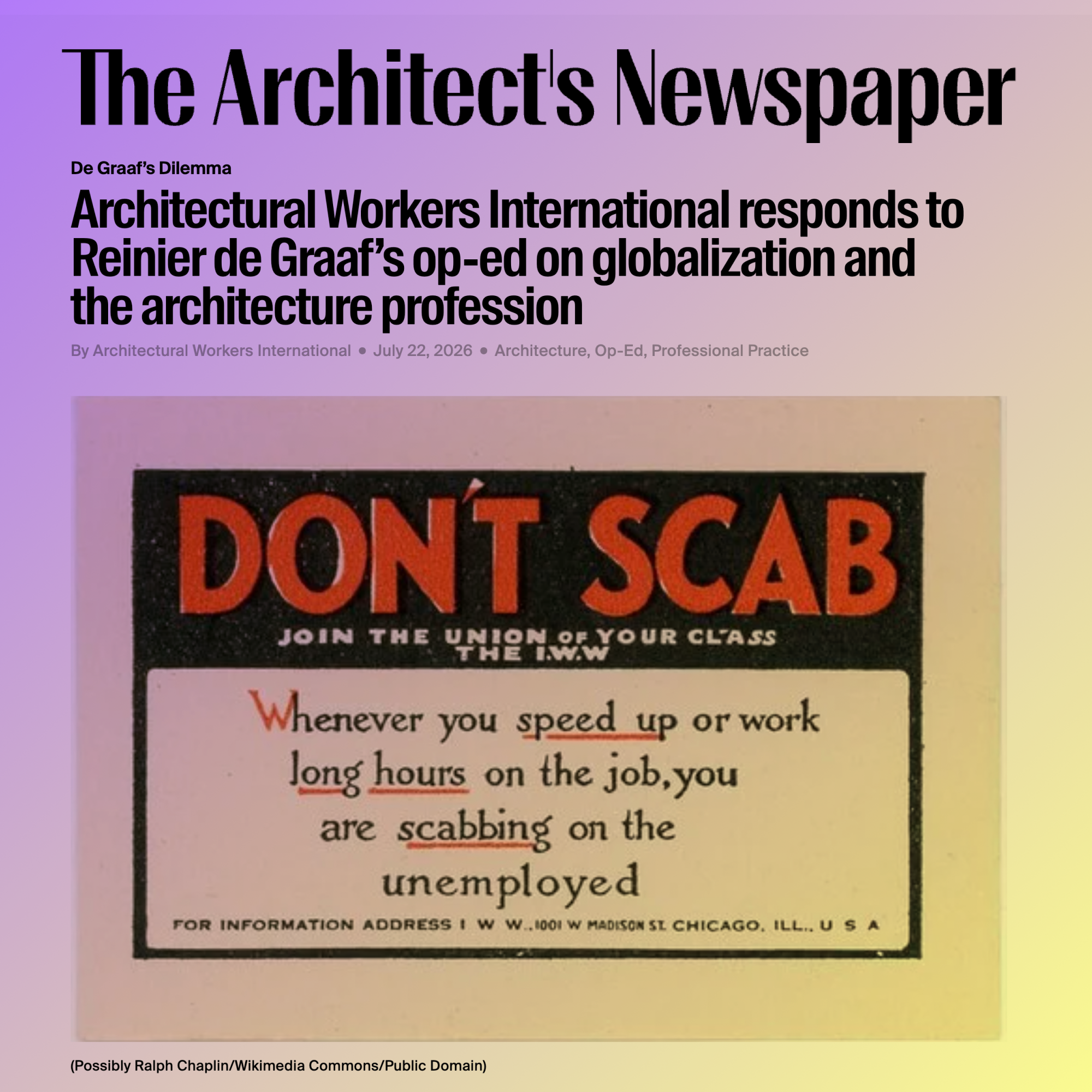
AWI Responds to de Graaf’s Op-Ed on Globalization and the Profession
Architectural Workers International The Architect’s Newspaper July 22, 2026 Architecture Workers International (AWI), the coalition of labor advocacy groups that includes TAL, has published a response to Reinier de Graaf’s recent op-ed for The Architect’s Newspaper on globalization, oppressive regimes, and the profession’s supposed dilemma. Where de Graaf frames the choice as one between complicity…
-

July ’26 Newsletter
July 15, 2026 Hot off the (digital) press: the latest Lobby newsletter. Dive in, and subscribe to keep them coming, over here. Highlights
-
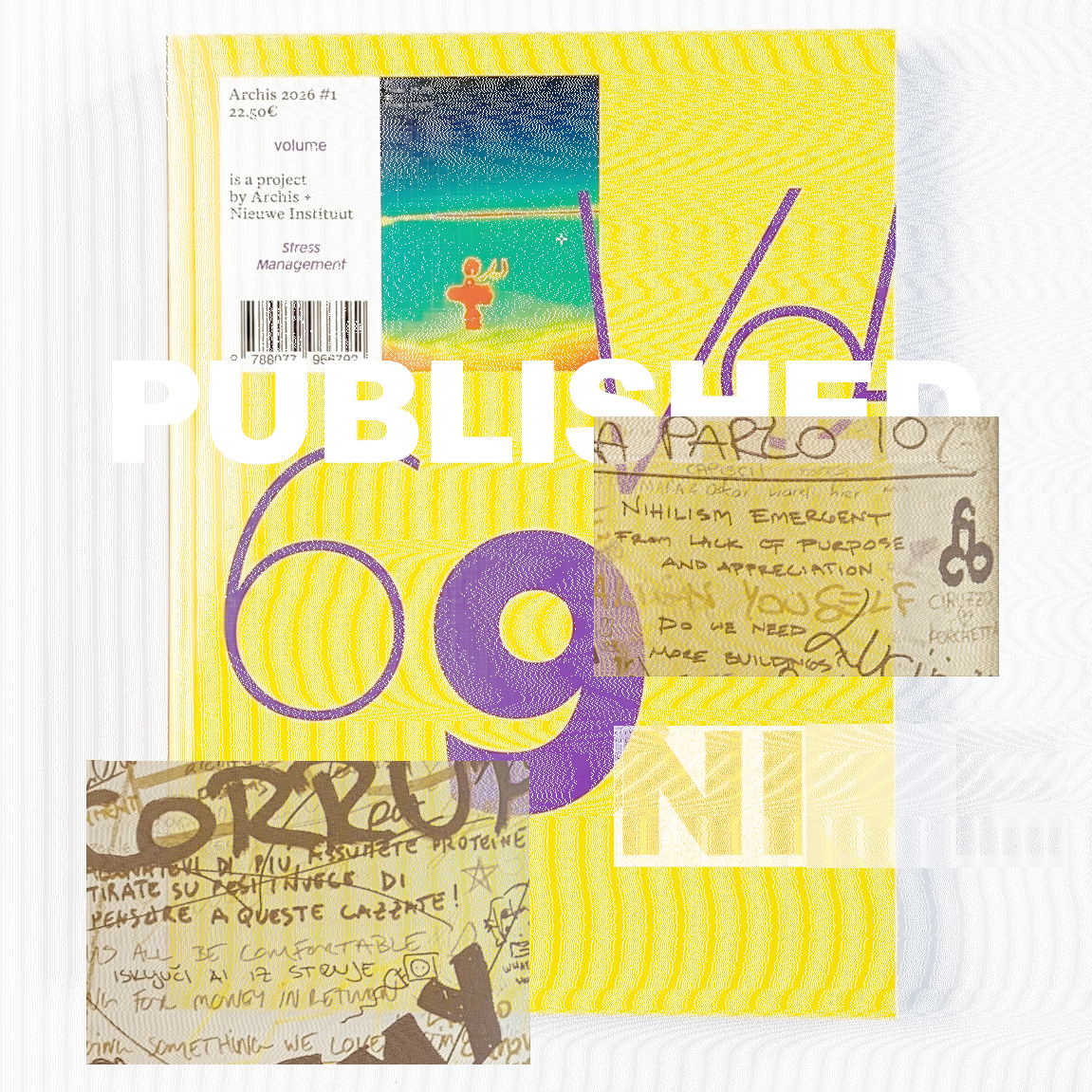
TAL in Archis VOLUME 69
Archis has published the participatory work of The Architecture Lobby exhibited at 2025 Venice Architectural Biennale, Organizing in the Lobby, in its 69th issue of VOLUME journal, Stress Management. Through this piece, we read the murmurs, outbursts, lizard-brain reactions, grievances big and small, and other stress releases of the collective psyche of the global architectural…